Iron-on Banding Secrets
George VondriskaThere are a lot of advantages to working with veneered sheet goods; stability, efficiency, lower cost, higher yield to name a few. One of the few downsides is that you need to cover any exposed plywood edges, to continue the illusion of solid wood throughout your project. The easiest, and one of the best ways to conceal an exposed edge on plywood is to use an iron on veneer edge banding. Some people find it challenging to achieve a perfect result using iron on edge banding, but you can achieve great results every time by following the steps that George shares with us:
Attaching the banding. The heat level, speed and pressure are all important. Not hot enough of slow enough and you might not get good bond. Too slow and/or too long under heat and you might scorch the wood. Watch the speed of application that George uses to get and understanding of how it should go. George also shows an additional step to ensure that your banding is solidly attached, and that step might just be the step that many people are missing.
Trimming the banding. This process works best with a purpose-built edge banding trimmer that works like a flush trim bit on a router, following the surface of your panel and trimming the banding to a perfect fit. George also shows how to read the grain, and how to cut in the correct direction.
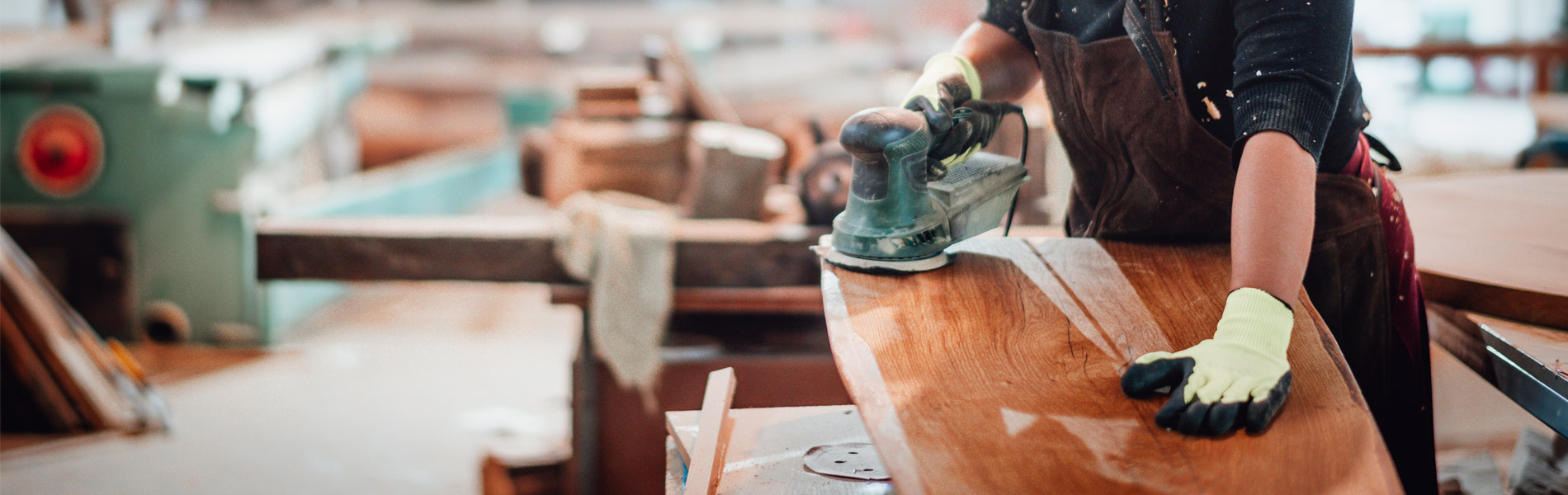
Perfecting the surface. After the banding is trimmed, use a sanding block and some finesse to carefully sand everything flush.
If you follow the steps carefully, you will be amazed by the results that you will achieve when you apply iron-on edge banding. For additional information on working with plywood on your cabinet projects, check out this WWGOA class on cabinetmaking.