Build a Bookcase with Kreg Tools
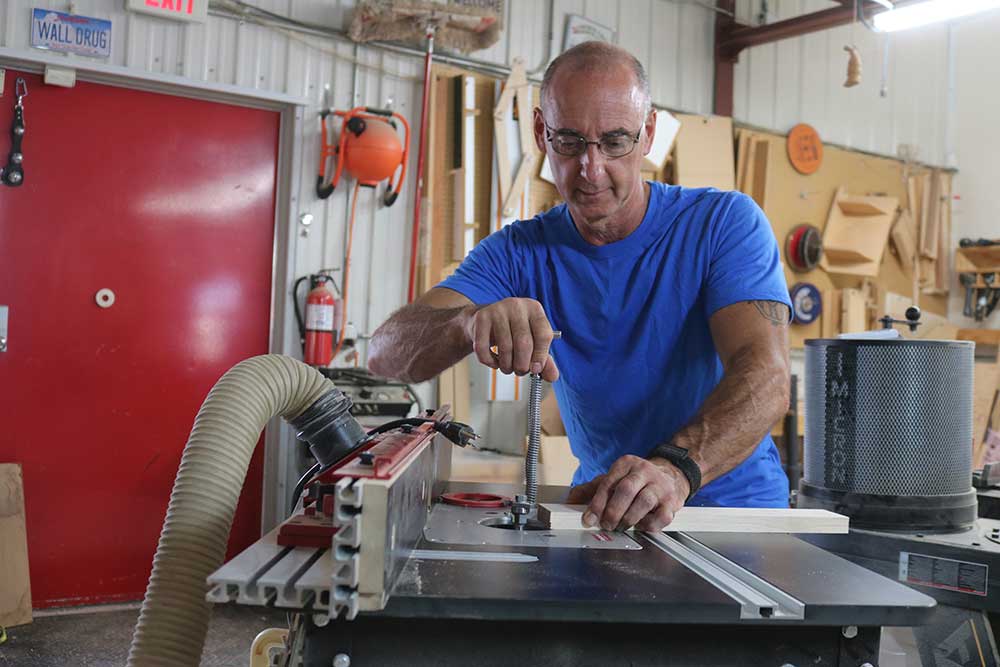
George VondriskaKreg recently released a bunch of new cordless tools, and we’re determined to put them to the test. We’re going to do that by building a bookcase.
The new cordless stuff
Kreg’s new line includes quite an array of tools; cordless drills, jig saw, circular saw, track saw, sander, multi tool, trim router and a pocket hole cutter. These tools are ready to go to work, and it was a pleasure using them on this project. In addition to the cordless tools Kreg has introduced a handy doweling jig.
Want to make this bookcase?
If you want to make one of these bookcases for yourself, but sure to grab the plan.
More info
For more information on Kreg Tools visit the company's website.
Share tips, start a discussion or ask other students a question. If you have a question for an expert, please click here.
Already a member?
4 Responses to “Build a Bookcase with Kreg Tools”
Craig has this amazing line of portable tools, all of which are cordless. We're gonna put these tools to the test by building a really nice pine bookcase. If you like the bookcase, we've also included a plan for it so you can make one in your shop. So let's get started putting these tools through their paces. First step in most projects is rough cutting your stuff down to size.
So I've got my pine. I've got my plywood. A good thing to know is this is what's called furniture grade pine. This is not from a home center; it's from a hardwood supplier. It's been kiln dried the same way hardwoods are, really, really nice to work with in order to cut the wood down to size; I'm gonna be using the cordless circ saw.
And processing these parts down. To get them a little bit more manageable. Next, let's go after this sheet, and we'll handle that using the tracks. So far, so good. Gonna bring in some more tools and do some more cutting to size.
Now, using the adaptive cutting system. I'm gonna further process my parts. And get everything cut to the right size. I gotta say, I love taking advantage of cordless tools and the mobility it provides. From ripping all the parts, let's switch to cross-cutting parts.
We'll get an end square on these and then get stuff cut to length, and we'll be able to start looking at joinery on the cabinet. Let's look at joinery including the pocket hole jig and the doweling jig. I'm gonna do the case joinery two ways. I'm gonna use pocket holes in the narrow rails on the top, and I'm gonna use dowels in the case bottom. So with our pocket holes, it gives us a chance to use the Kreg.
Pretty cool. Now, I'm gonna set up the dowel jig, and we'll use that for the bottom parts. The doweling jig I'm using right now has the 3/8 guides in it, but those can get swapped out for a quarter or half inch. The pin on the end is an index, so we go bloop. Bloop, that makes sure that you're in the right spot every time.
And the pin's next job. is to make sure that when I index over it, it indexes uniformly so I can come from here. Align to there that way, there's no measuring, no there's really no way to mess this up because. The pin is locking you in the right position every time. I'll do the same thing to the other end, and then we'll look at getting holes in the mating piece, the vertical.
Now, same thing, we'll take advantage of indexing here. By doing that there And when we're done. That gives us that. And that, which then when we assemble. Very nice.
We got one more vertical to go and our case joinery is all done. I'm doing adjustable shelf holes. Very good idea to do that, you know, before the cabinet gets put together. And this is also an opportunity to use the new cordless drill. Very cool.
Next step for us on the project will be getting the case put together. Once the case is put together, we can go back after the face frame again, and uh this is gonna start looking like a bookcase in no time. Assembly is always a fun part, 'cause you get to see your work coming together. I already saw the dry fit. On these dowel joints, but here we go with the real fit.
I love the way, you know, watch here as these come together. A great sign of registration is when that front edge lines up. Just like that. On this end, remember, we have pocket holes cooking here. I love the way an impact driver can bring stuff together like it did right there.
Pretty perfect. I'm gonna drive some more pocket screws in my rails. And then we'll be able to have a look at the face frame. And what it's gonna take to get that on the front of the cabinet. Got some more pocket holes to do, this time in the rails of the face frame.
Let's take opportunity here to talk a little bit more about this rebel pocket hole cutter because it's got some cool stuff going on. We can control it, of course, for thickness of material that you're working with, so that's gonna help control the position of the pocket hole to make sure that it's right based on the specific thickness your project is working with. We can further adjust that with a micro adjust so if we need to advance or retract that hole just a little bit, that happens here. A narrow stock like these rails. Take advantage of the feet, the stabilizers at the back.
What these do is give this a leg to stand on so that when we're on narrow stock like this, it takes the wobble out of the machine, giving you more stability. So overall, the system comes together really well here on the front. What I'm looking at is this is the center of the pocket hole. If I had marks on here, we could be using that to get our alignment. I can also use this little foot right there as an indicator of where my hole is going to end up.
And with the cordless-ness of that, if that's a word, uh, the portability, taking that to wherever you're working makes that super, super simple. With these pocket holes in, I'm going to assemble the face frame, get that clamp to the case. Meanwhile, we can work on the cool feet on the bottom of the case. I'll catch up with you in just a sec. Let's cut curves in the pedestal.
When you lay these out, it's lovely to have a flexible curve. You can find these at woodworking stores. You can find them online, but once you've got your layout marks on the pedestal pieces, you can form this and it stays formed, and then you can draw your curves. We're going to cut the curves with Craig's jigsaw. Some good stuff going on here.
This control right here lets you control how aggressive or not the blade is, so at 0 it really has no orbit to it; at 3, it has a lot of orbit to it. So if you want to cut really, really fast, run it on 3, if you want to cut with more control and probably a better surface finish, run it at 0.1. It works really well for the pine that I'm in here. The light is a lovely feature so I can see what I'm looking at as I'm cutting. Cut outside the line; that can then get sanded back to the line, which will take off the few saw marks that we have there.
Same thing on that long piece for the pedestal base. Once you've got those cut, glue the mitered corners together and add the support blocks, and we'll be able to get the pedestal base over on the bookcase. I love the convenience of cordless tools no matter what. I uber love, is that a word? The convenience of a cordless trim router, and this one from Craig has been doing great for me.
I have in it a flush trim bit. There's just a tiny bit of overhang where I projected the face frame past the cabinet. Let's get rid of that overhang. Don't go away. I'm gonna swap bits and we'll do a little round over on there and ease that corner.
And while the cabinets are in this position. Great opportunity to do some sanding. Another spot that I really love going cordless on a random orbit sander like this. It's so convenient to be able to take this anywhere you need and not be tethered. I got some more salmon to do.
And then we'll be able to start detailing this out. There's the pedestal with its support blocks installed. This is ready to go, loop upside down. On the bottom of the bookcase. Adds such a nice detail, it will lift the case off the ground visually once the case is stood back up on its bottom.
I'm gonna take advantage of being in this position. To do some more sanding. Make sure I have that pedestal completely sanded and then, man, just a few more details on this and this bookcase is gonna be done and ready for finish. Looks good. What I need to do next is cut the back to size, make the adjustable shelves, but a bunch of things came out of this one.
A cool bookcase. Two, a great field test. Of the Craig tools, and I will say they did everything that they needed to do for me to get through this bookcase. They worked really, really well. I love that they're cordless.
There's a lot of great stuff going on with these tools, so successful bookcase, successful tool usage, and like I said, a great test of putting those Craig tools to work.

Are these 30 min ads that we have to watch before each video a new thing?
The download is not the book case
The download isn't to the bookcase!
Project plans are different