Arbortech: Build a Bench Part 1
George VondriskaLet’s build a bench! This project is a three-part video series. Be sure to watch Part 2 and Part 3 to see the entire project.
The pine slabs I’m using for the seat and back are 2” x 20” and will end up 45” long. The ends are thicker, 2-3/4”, and end up 40” long. You could also use 2” thick pieces for the ends, but I like the heavy look of the thicker pieces. You don’t have to use live edge pieces, but they do look cool.
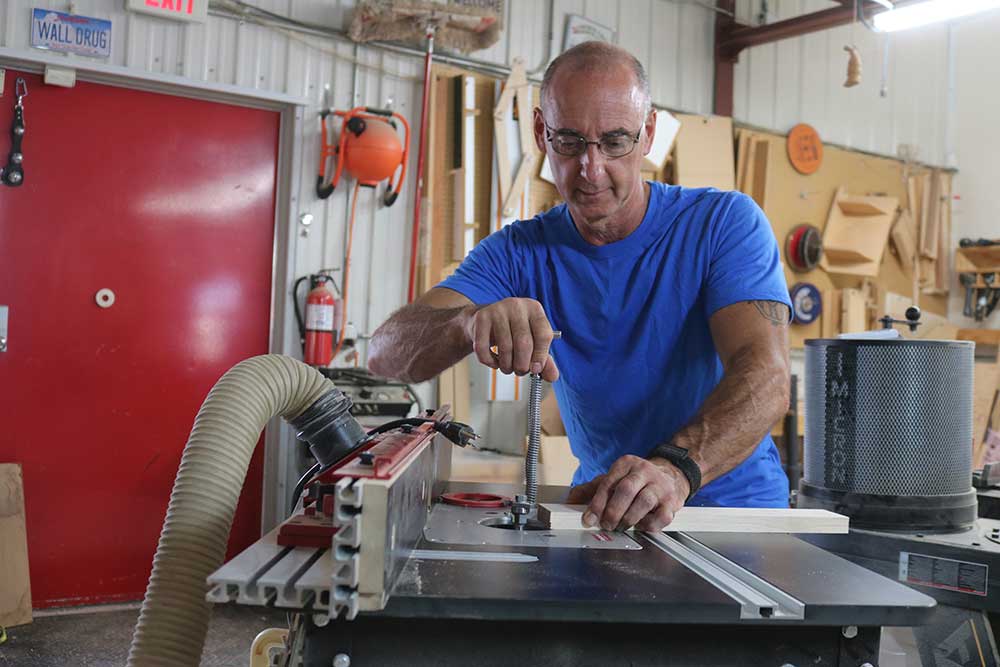
Prep the slabs using a Turbo Plane and leveling shroud. This setup makes it easy to smooth the milling marks from the sawmill and get the slabs flat. Plus, the dust collection is great. Use a straightedge to look for high spots. Mark those with a pencil and keep working with the Turbo Plane until all your slabs are flattened on both faces.
Once the slabs are flat switch to the sanding head. I started at 80-grit and worked my way up from there. Whether you’re using the Turbo Plane or sanding head, you’re going to love the excellent dust collection. There are no shortage of cool things you can make with Arbortech tools.
More info
For more information on Arbortech visit the company's website.
Share tips, start a discussion or ask other students a question. If you have a question for an expert, please click here.
Already a member?
3 Responses to “Arbortech: Build a Bench Part 1”
I had so much fun building this live edge pine slab bench, and I did everything using the ArborTech system. So let's talk for a second about the bench. We've got a few cool things going on here. All the pieces came out of one tree, which was neat. The seat of the bench and the back of the bench are actually book matched.
You'll see more about that later, but what was really fun was that I leveled the slabs and carved the slabs. I detailed the slabs using ArborTech tools, including their turbosplane. The Sphero plane, there was some sanding involved, and I used the precision carving system to do all the detail work on the back. So instead of me just talking about the bench, let's have a look at what it took to build this bench. I am really, really excited to get going on this project.
I've been thinking about this for a long time, and today is finally the day. I am gonna make a bench out of these pine slabs and these pine slabs, and I'm gonna do that with a bunch of different ArborTech tools. More on that in a second. Let's talk about what's going on here. If you look closely at these slabs, there's a really cool feature.
Look at the end grain. And when you look at the annual rings in that end grain, you can see they flow together. Another detail, another giveaway here: when you look down this long grain edge, the edges line up. What that tells me is these two slabs were sequence cut. What that means is that they lived next to each other in the tree until the bandsaw mill cut them, cut them out of the tree.
Now, why am I so excited about that? Here's the deal: when this turns into a bench, the horizontal piece is gonna be the seat. This piece is gonna become vertical in order to be a back, and look something like that. Now what's cool is when we have these pieces, they've been book matched because they were sequence cut. So it's like doing a resaw on a bandsaw; you can get the same book match effect.
So when you look where that bar conclusion is, it's there, and its mirror image is there in the back. That's gonna be a really cool aspect of the finished patch. If you can't get that when you're ready to do this project, it's not a deal breaker, but it's a pretty nice touch if you can get sequence cut slabs and you get that mirror from the seat to the back. Here's what you need in order to have a bench that's long enough for two people, you want it to be 42 to 60 inches in length. I'm gonna end up around 45 on these.
You want the seat of the bench to be about 16 to 20 inches wide or deep in order for it to be comfortable enough that when a person sits it's comfortable. So that's what we need for width of slabs. These are around 20. There's stuff piled up on the bench over here. We're gonna make support components from this slab.
Like these two, it's about 2 inches thick right now. We're gonna make vertical components. Think of kind of a church pew style, so we're gonna make vertical components out of these slabs. They're about 2 and 3/4 inches thick. They don't have to be thicker, but I like the way that's gonna look in the finished product.
That those have a little bit more mass to them. So again, if, if everything was 2 inches, I'd be doing this the same way I'm going to show you now. Having those a little thicker is nice. Now where are we going from here? What's gonna happen to start with is these are not flat, they're full of Anam marks.
I'm gonna be using the turbo plane. In order to get these flat, now the beauty of this is you'll see all this happen. We can cut with the turbo plane, we can sand with the sanding head, we can go a long way toward getting these cleaned up. The other thing that's gonna happen. Is the sphero plane is gonna come into play and we're gonna be able to use that in order to dish the seat in order to make it more comfortable than just having a flat slab like we do now.
Gonna also add some details by doing some carving so we're gonna grab some of these, get those loaded, and use those to put some kind of detail in the back to make this a little bit more personal, a little bit more unique, a whole lot cooler looking. So this is fun. I've been stewing on this idea for a long time. I am ready to finally bring it to life and show you what I'm doing and how I'm doing it. Here's what's going on.
I have in my hot little hands. The turbo plane set up in the power carving unit. The turbo plane is an amazing cutter. In addition to the Turbo Plane, there's a leveling shroud on the unit. Think of the leveling shroud as an outrigger.
So, when the leveling shroud is on there, just like the name implies, and I'm using it. The leveling shroud is preventing me from rocking back and forth like crazy and putting big digs into this. As I'm cutting and removing material, or I want to change what I'm doing, I can micro adjust in order to increase or decrease how much Turbo Plane projects beyond. The leveling shroud, so it's a very cool feature because it really lets you fine tune how much material you're taking off. It gives you really, really good control over what you're doing here.
So it's possible as I continue to cut in some spots you might hear it just zing and it took off a high spot, and then once the high spot is gone, it goes back to cutting everything. The other thing I want you to watch for is the other part that's so incredible, which is no airborne chips or dust at all. The dust extraction on this is really, really good, which is critical because we're gonna remove a lot of material here to clean up the slab and get it to look the way I want it to look. So back to what I was doing, which is cutting, cutting, cutting big gains, already got some more to go. Couple tips as you're doing this.
One, grab a straight edge. And use that. To look for high spots. And when you find a high spot, then you can grab a pencil. And mark it so when you come back, you know, all right, I'm gonna hit there, I'm gonna hit there, I'm gonna hit there, then I'm gonna check again to see that the high spots are down.
The other thing is trying to track and make sure that you're consistently removing materials. So when I get to this point where it's pretty flat, the high spots really are gone, if I make another pass, I wanna make sure I consistently pass across the whole slab. Keep it flat. So to do that, I'm gonna again, uh, throw a pencil on here. I've done this a bunch of times already through a pencil line on here.
And now as I cut, what I'm trying to do is remove the pencil line once it's gone from here. Then I'll move on once it's gone from here, then i'll move on until I'm all the way across. The other thing that I like to do as I'm working with the turboplane in this environment is, you may have noticed, I'm not doing this with my arms. I'm really locking my arms in place and I'm doing this. With my body, and what I find is that that helps me keep the leveling shroud nice and flat on the work.
It gets all of this stuff being the tool moving in a straight line back and forth, back and forth. So your arms are good for, you know, small finesse movements. We're making a pretty big movement here and I don't want my ball joint in my shoulder to be like introducing a rock to this and taking it out of flat. So for me that motion of locking my arms and doing this. and this, I'm really going back and forth with my legs instead of just with my arms.
Do this while you're turbo planing. Do this to all the slabs and get them to this point. Then we can switch to the sander and clean this baby up. Once we're set with the turboplane, we're ready to do some sanding. And we can take advantage of the system here to make the sanding go really, really, really easily.
what I did is I took the turboplane out. I left the leveling shroud on. What I've got now is a sanding head. it's Velcro, so it's very, very easy to swap paper, to swap grits, and with the leveling shroud on here, you can imagine we get the same benefits that we do from the leveling shroud with the turboplane, which is an outrigger. So as I'm sanding with this disk instead of this happening and that disk potentially digging in, digging in, digging in.
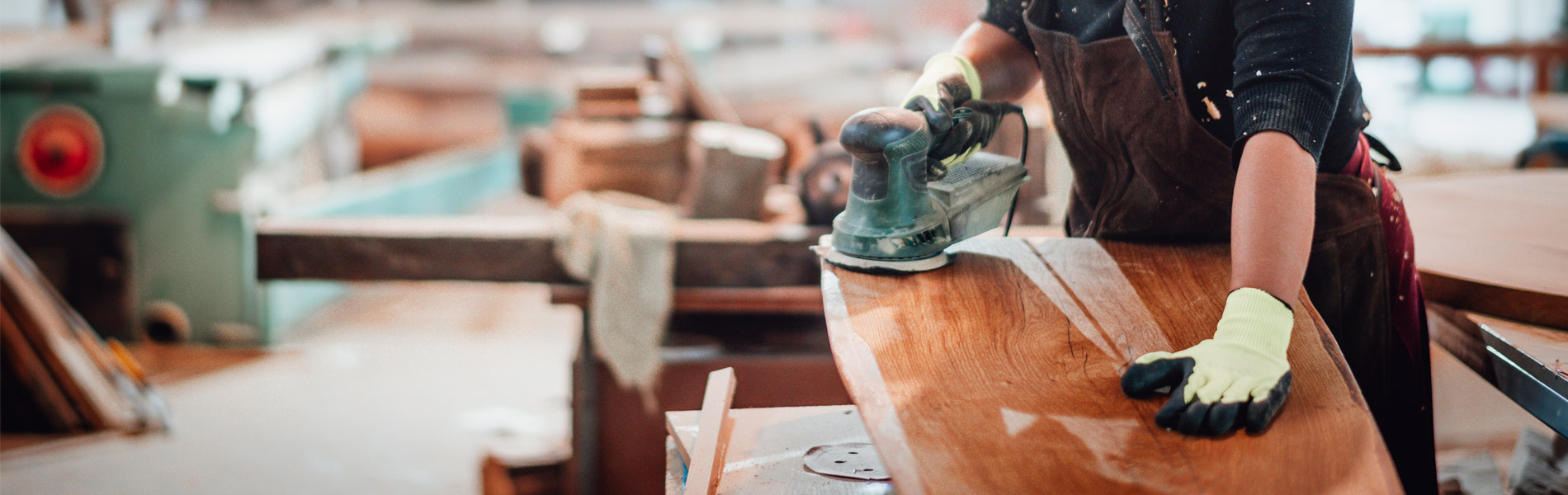
I can ride across the surface and clean this up. Now remember our trick with a pencil, so it's a good idea to do that again, and that's just gonna help ensure uniform removal, and we're gonna take away everything that doesn't look like a bench. We're gonna just spend some time getting this cleaned up so that the surface looks not just better but way more better. so a couple things. One, I'm running 80 grit.
It took very little to clean this up. I'm gonna do another pass at 80 and then I'll just keep working my way up through higher grits with the Velcro discs. The other thing that's worth pointing out is that in doing that whole sanding pass, I'm not standing here in a cloud of sawdust. I said earlier the dust extraction on this thing is really, really good. And it really is; it's incredible that with all the sanding I just did, there's nothing airborne.
The leveling shroud is worth its weight in gold because it's preventing me from being able to dish this out. I'm gonna do another pass, I think, with the 80 and then I'll jump up to 120 and just work my way up, up, up, up until I'm happy with how this baby looks.
What are the dementions of the end pieces?
would this be a good tool for end grain cutting boards?
I was interested until I realized that this was simply another sponsor looking for a project.