Shop Dust Collection: Shop Vacuum vs. Dust Collector
George VondriskaWoodshop dust collection is a mysterious topic for many woodworkers, but we at WWGOA like to approach it in very simple terms that we can all understand. When contemplating woodshop dust collection, the first question that many woodworkers as is “Do I really need a dedicated dust collector? Can’t I just use a shop vacuum that I already have?” That is a fair question; both tools are designed to suck air quickly and capture debris in a bag or container. Why not just hook a big shop vacuum up to a duct system that connects to all of your tools? Wouldn’t that constitute a sufficient shop dust collection system?
Two different animals. A dust collector and a shop vacuum might seem similar at the surface, but they are actually designed to perform quite differently. One is designed for moving air at high pressure, and the other is designed to move air quickly in large volumes, and it is beneficial to understand the difference.
When to use one vs. the other? There are certain tasks that a dust collector will be better for, and other tasks where a dust collector would be a better choice. Choosing the right one for a given application requires a good understanding of the intended purpose of each tool.
What if you can only have one? If you have a shop full of large dust producing power tools, and you want to standardize on a single woodshop dust collection solution, then it makes sense to invest in the best dust collector that you can afford. But if you have both and want to take advantage of the capabilities of each one, then George will help you make a good decision as to how to position each tool as part of your overall woodshop dust collection system.
We are way back in the corner of the shop today so that we can have a look at the dust collector versus the shop vacuum. What do these bring to the dust collection table? When should you use one or the other? Big thing to understand here is the way that air flow and vacuum is measured. So we've got two numbers.
CFM stands for cubic feet per minute. Static pressure is a different measurement that really measures how much vacuum we're producing. So static pressure a lot of times is measured in inches of water. And it's just what it sounds like, which is if I connect a vacuum to something, how far up a pipe will it pull water, how many inches of water can it draw up that pipe? The thing with the dust collector is it moves a lot of air.
So it could be 400, 1000, 2000, 3000 CFM, cubic feet per minute. However, the static pressure number for a dust collector is really low, it doesn't have a lot of vacuum. Shop vacuums are just the opposite. They typically have a pretty low CFM, maybe around 90 or so, but their static pressure is really high. So when it comes to vacuuming stuff up off the floor, the shop vacuum works better for that than a dust collector.
If I clog up the line on a dust collector, the impeller down in there, the thing that's moving the air, is just going to cavitate and probably nothing real bad is going to happen. With a shop vacuum, if I clog up the line, it's possible that a motor overheats because it requires that air flow to keep coming past it. And in the absence of air, cause I clog up the line, then I'm not going to have that air flow and you might burn up the motor prematurely. Now tool by tool, I find that these tools work well on some tools for dust collection, not as well on others. So something like a table saw, jointer, planer, where we really produce a lot of chips, a lot of dust, a dust collector is really the way to go for that because we need that high CFM, we need a lot of air flow to grab that stuff out of the air, pull it into the pipe, get it to the dust collector.
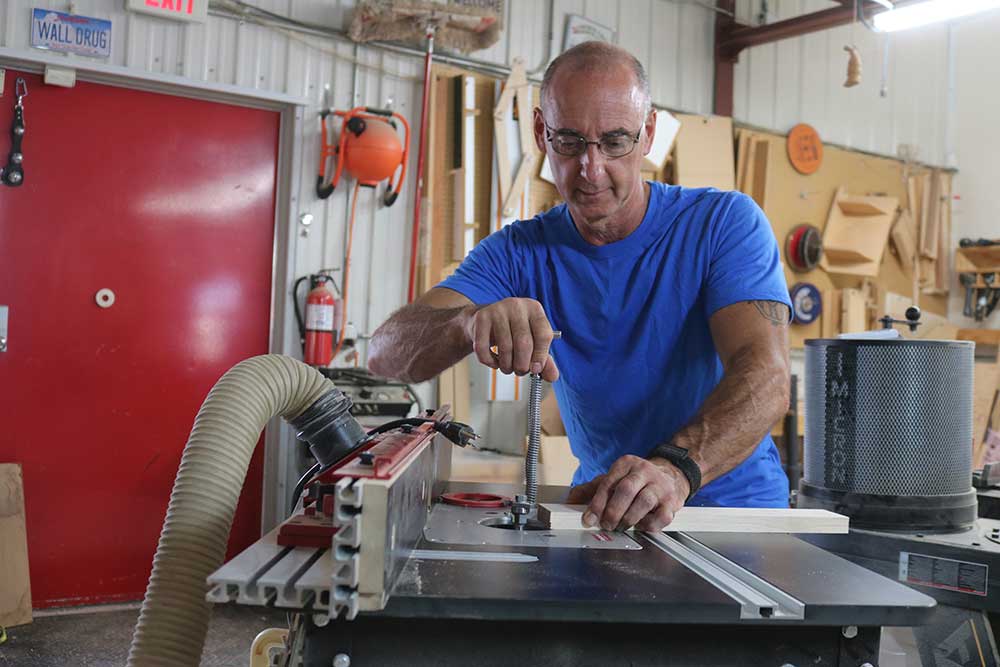
On other tools, router table, bandsaw would be examples, I really find that a shop vacuum works better for that. And I think the deal, part of the deal is that those chips are coming off at a pretty high velocity and low air flow but high static pressure is what's required to grab those chips and kind of change direction, pull them toward the vacuum, get them in the tub. So they both have applications in your shop. But you really need to look at is, what are the CFM requirements of your tools? And you can find this kind of information online, match the CFM requirements to the thing that you're connecting to it to make sure you're pulling enough air past it.
Big thing to remember. We've got a lot of vacuum here. We've got a lot of air flow here. Two distinct jobs, good applications for both of them in most woodworking shops.

Share tips, start a discussion or ask other students a question. If you have a question for an expert, please click here.
Already a member?
No Responses to “Shop Dust Collection: Shop Vacuum vs. Dust Collector”