Pocket Hole Joints: Is Glue Necessary?
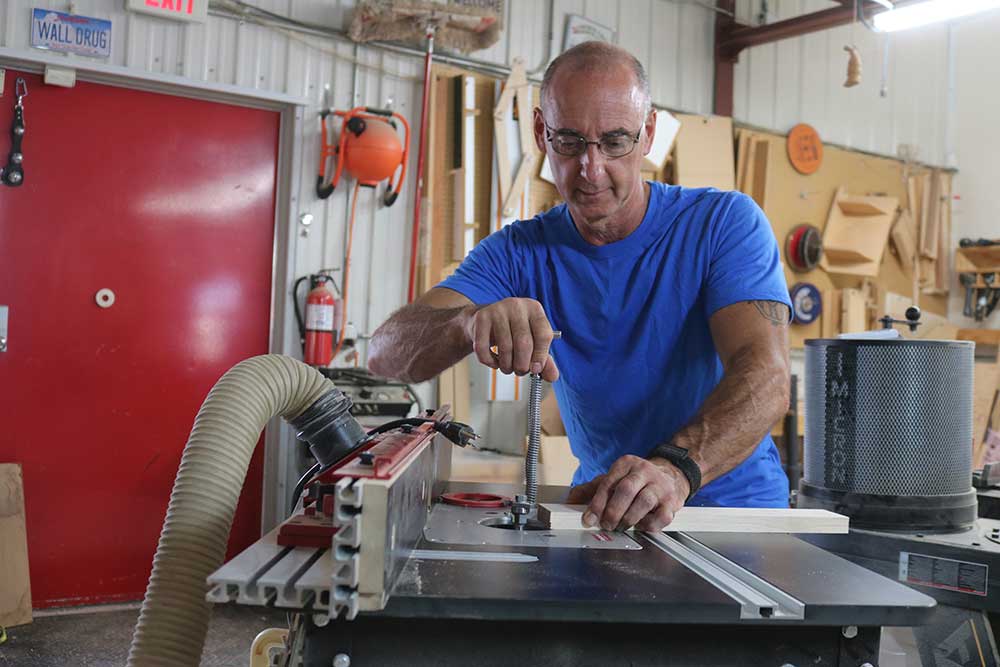
George VondriskaThere are a handful of topics and questions that pop up pretty regularly in the woodworking world. Most commonly: should I or shouldn’t I add glue to pocket hole joints? If you ask a room full of woodworkers you’ll probably get answers that fall on both sides of the fence. We decided to do a little experiment. Now we know that we didn’t take a hugely scientific approach to this, but it provides some results that are interesting.
The Experiment
We made up two pocket hole joints. One with glue in it, one without (The specific glue used was Titebond Quick and Thick). With one leg of the joint held in a vise, we yanked on the other leg, looking for a fracture. One measure was; how much force does it take to break the joint. The other was; what exactly does the joint look like after it’s been broken.
The Results
Well, we’re not going to give away the results of our experiment here. You’ll have to watch the video. But we can say you’re going to want to incorporate the results into your projects.
Applications for Pocket Hole Joints
There are so many places you can use pocket hole joints and screws. This is a such a versatile way of putting wood together. While most of us probably use it for face frames, or similar applications, pocket hole joinery can be used in lots of other applications.
Also Important…
Choosing the right joint for your project is important, and choosing the right glue is important too. Have a look at 4 Types of Glue You Can Stick With to make sure you’re using the best glue for your projects.
Share tips, start a discussion or ask other students a question. If you have a question for an expert, please click here.
Already a member?
2 Responses to “Pocket Hole Joints: Is Glue Necessary?”
Let's discuss a little woodworking controversy, and that is should one or should one not put glue into their pocket hole joints when they put them together? So, I'll tell you a little bit of my story with this. My friend, Charlie, had a big cabinet shop where they were making face-frame style cabinets all the time. Got kind of far behind on work, and he was so desperate for help, he asked me to help for a day. So I went over there and I was helping him put face frames together.
And I'd put the parts together, rails and stiles, drive the screws, rails and stiles, drive the screws, and he noticed I was not putting glue in the joint. So he called me out on that and I said, "Well, you know, everybody knows it doesn't do any good to glue end-grain 'cause it's so porous, it soaks it up, there's no real bond there. And he said, "I don't care what you think you know, we always put glue in the screw pocket joints." So I put glue in the pocket hole joints. As it turned out, I had one rail that I had mislocated just a little bit, so I had to move it. So I took the screws back out and I grabbed that rail and I pulled on it and it didn't wanna move.
And I pulled on it and it didn't wanna move. And this was like, I don't know, between two and five minutes after I had put it in, so really close to assembly time. And in the end, when I pulled on it harder, long grain from the mating piece came with end-grain from the rail. So that told me Charlie was probably right. Do not ever tell him I said that.
But Charlie was probably right, and glue is a good idea in these joints. So here's our experiment today. And I recognize this is not a 3M laboratory, this is my woodworking shop. However, we'll see what happens. On this pocket hole joint, there's glue in there.
On this pocket hole joint, there's no glue in there. So what we're gonna do is put these in a vice, pull on 'em. Now, same species between the two joints, they're all red oak. The parts are all the same length. So I'm trying to make this a little bit scientific.
So let's do the no glue one first. A lot of people put their pocket holes together without any glue in the joint. Grab it in a vice. And then what I'm gonna do is try to just consistently grab this end of what would be your rail, pocket holes are going that way. Here's what I'm gonna do, I'm having a mind change.
I'm gonna turn this around so you can see the pocket hole joint. All right. So I'm gonna try to just push on the same spot on both of them, and we'll kind of see what happens here. All right. No glue.
And what we did is, the screws held great, pulled them right through the end-grain of the mating piece. Now, glue, or eulg, I guess, for you. All right, so I'm pushing harder now than I was on the first one. All right, now, if you look, we've got the same thing going on. Those spots on the end-grain are pieces of long grain that were pulled out of this piece.
And it took quite a bit more tension to get this one to go than it did the first one. So again, I'm the first to admit, you know, this is marginally scientific, but my lesson out of this is what does it take to add a little bit of glue to that joint? Not much. And I firmly believe that it adds a lot of strength to the joint, so it's worth doing. And like I said, please don't tell Charlie I said so.
So glue in the pocket hole joints, that's my vote.
You should have tried this third experiment: Glue plus the screws, then remove the screws when the glue has fully dried. I'll bet that the screws didn't help much except to help hold the pieces together while the glue was drying.
Uhm... Seeing them after the break, it doesn't look to me as if the screws were driven as deeply in the first joint as in the second. So while I believe that the glue hardened the wood around the screws, I'm not convinced that your test actually proves what it set out to prove. Please try again, with this point in mind. Also, try pretreating with a CA glue, which is often used specifically with the intent of soaking into and hardening wood,and see how that compares. Finally, it really isn't hard to rig a device that will give you some numeric results (a screw as an anchor point, a bag you add weight to until the joint breaks , and a pulley to convert the weight to horizontal force will do the job, preferably tested several times since any one sample may be unusual). Don't show us, convince us.