Coffee Scoop
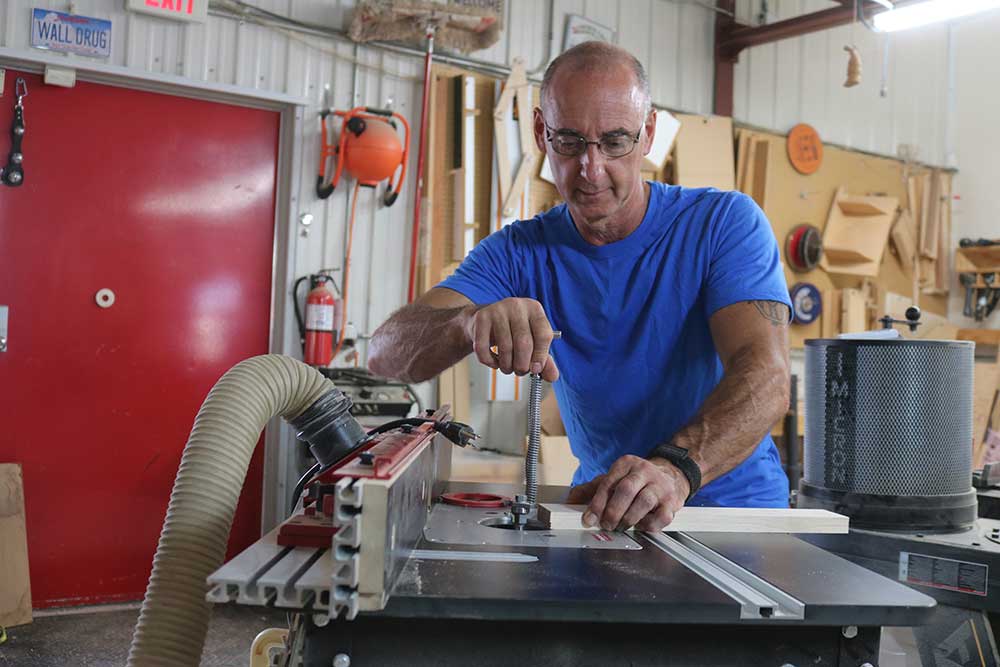
George VondriskaAny coffee lover will appreciate this project; a custom turned coffee scoop. The turning process is pretty straight forward, but there are some tricks in mounting the blank and fastening the scoop to the wooden handle. Decaf or regular, this scoop will help keep your coffee habit satisfied.
Don't know about you, but I am a big coffee drinker, and I went away to scoop my coffee grounds into the coffee pot, that's woodwork in specific. So this is a great project for it. It's a turned handle matched to a kit that you can purchase. So I'm going to take you through the process of how do we get the kit mounted to the handle? How do we get the handle turned?
Some tips and tricks, going to work with wenge here, which is kind of a chippy wood. So I'm going to give you some technique for working with that particular material as well. So let's get started, so that by the time we're done, you know the scoop about making scoops. Depending on where you get your coffee scoop kit from, might look a little different from this, but here's what we need to understand. We're going to take a chunk of wood.
We're going to turn that on the lathe, and the way most of these work is that this component simply presses into the end of our turned handle. So as a result, the big thing we need to know about the kits are some dimensions from this business end right here. I need to know how big that is, so I know how big a hole to drill. So using a pair of vernier calipers, take a measurement across there. Sometimes that information is provided with the kit, by the manufacturer, and it'll tell you what size hole you need to drill.
The other thing I want to know is the diameter that I'm looking at here. Because when we press these components together, I'd like my handle to be this size or slightly bigger. As a rule, we don't want the turned component, the wooden component to be smaller in diameter than this metal part here. My preference is to leave that slightly larger. So once I've got this dimension, that tells me how large a blank I need to start out with.
So get that information, either from the manufacturer or off of the kit components themselves, and you'll be ready to move on with the next step in the process. To get a blank on a lathe, I've done a couple of things in anticipation here. On this end, what I've done is found the center by going corner to corner. I'm going to do my turning in a chuck, because we have to have the ability to end bore this piece to receive the coffee scoop itself. So the next step I did was I used a scratch awl and I put a little dimple there.
And the reason for that is that it's going to make it easier to get my setup going. So that's got to fit in there. Now, before I tighten the chuck, I'll bring the tail stock over, and dial the center of my center into the center of the blank, just gently, not torquing on it, then I tighten the chuck. That takes care of getting set up here on the lathe, so that we're ready to start our turning. Before I do any turning on the blank, I want to get the whole set up here, that's going to receive the coffee scoop.
So what I've done is I've got the correct diameter drill bit in a chuck, in the tailstock. And I've got a piece of tape on there that's set beyond the point where I need to drill. I prefer to drill those holes a little bit too deep. Wouldn't it be a shame if you get all this done and you go to press these together and you find you drilled the hole a 16th of an inch to shallow, and this shoulder would not seat up against the end of your blank. So I'd rather go oversize than undersize.
So with the tape on there, we can bring our tail stock over and get ready to bore the end of the blank. That takes care of that. Now again, make sure that for your particular kit, you're using the right size bit, you get the hold of the right depth and you'll be all set with the end bore we need to do on this. We're ready for the fun part. We're ready to do some turning on this.
But I don't want to just turn without knowing where I'm going. So what I want to do here is an initial rounding, and then I want to establish a diameter that's going to match this. So again, my general approach to this is to make the end of my handle slightly larger than the end of my kit. So what I'll do is use my calipers, and I'm going to set these, so that they're a little bit bigger. They're about a quarter-inch larger than the metal component.
Step one is going to be to use a gouge and turn this round, then I'm going to use the calipers and a parting tool to establish that diameter on this end. Once that's done, we'll be ready to move on. Now, to support this blank and make sure that it doesn't chatter, and I can cut a little bit more aggressively, I'm going to bring my cone center in here to provide that support, and we're just about ready to make chips here. That takes care of the work we need to do on the end there, so that that diameter is slightly larger than the kit diameter, and wraps up what we need to do in this step. When it comes to shape and the handle, this is where beauty is in the eye of the beholder.
So I do want to mention a couple of things here. The wood I'm working with is wenge. Really pretty, and I thought it was kind of cool to have a dark, dark, dark wood to go with coffee scoop, because coffee is so dark, coffee grounds are so dark themselves, so it kind of matches that way. But it's a very chippy and splintery wood. It's going to be beautiful under finish, but you really got to keep your tools sharp, light passes, to make sure you don't tear big chunks out of this when you're working on it.
Now, one of the things I've done is I've established the top of the handle, the end of it up here, but not cut that down too far. 'Cause I don't want to weaken the wood here when I'm still going to be doing a lot of turning on the rest. Coffee scoop doesn't take a lot of strength, so we don't need a huge, robust handle. So I'll continue to reduce the diameter a little bit, to make it a little more delicate-looking, refine my shape some more until my shape is just the way I want it. Basically, I'm just taking away everything that doesn't look like a coffee scoop handle.
Once the shaping is done, then the next step is sanding. Now, one of the things to notice is that up here, on the chuck end, I've really reduced that diameter. There's only about a quarter inch of wood still holding the piece in the chuck to the handle itself. The reason for that is I want to be able to get to as much of this button up here as I can, with both sanding and finishing. So typical stuff here, I'm starting with 150 grit paper.
I'm going to work my way up through a progression of grits, till I have it ready for finish. One of the things that I really like for these contoured handles is using these to form pads, 'cause they do a great job of conforming to the turning. Gotta be careful that you don't get a lot of heat buildup, 'cause you can start to melt the form backer on this. So a light touch is all it takes. Once we've got the sanding done, we'll have a look at getting some finish on this.
The grain on this wenge is just cool. Looks great with just few minutes of sanding on there. So we're ready for finish. I'm going to use what's called a friction finish. And so paper towel there to protect the bed of the lathe, so I don't get any finish on the machine.
And with the friction finish, what we'll do is we'll put it on wet and then with the machine running, we'll just let the paper towel rub up against it, and that'll really build up the polish on it. The wenge is gonna soak up some finish 'cause it's a porous wood. All right. I think I got plenty of product on there. So now I'm just using the dry part of the towel and let that rub a little bit.
And let's see how she looks. Very cool. It's a dark, dark, dark, dark wood. No contrast, really at all, between the grains, or very little. I'm going to do a light sanding with a very fine grit sponge, then we'll come back and get one more coat of finish on this, and finishing and sanding will be done.
Looks great. That sanding and finishing step is taken care of. Finish is all set. So we're going to take the tail stock out of the way, bring the tool rest back in. Now what I want to do is part it up here on the chuck end.
So my approach to this is using the skew. I'm going to allow the tip of the skew to come in like this, and I'm going to pick away, pick away, pick away. I'm trying to get the best surface finish I can up here. It's going to take a little bit of hand sanding when it comes off, but I don't want to have any chips up here on the top of this button and the end of the handle. So I'm going to do as good a job as I can to get a great surface finish, then with my other hand, I'm going to be ready to catch this so it doesn't zing off the lathe and fall off to the floor.
There's our handle, all done. Now up here on the top, that's the work I did. You can see that ring right there. That's the amount of what I started with, using the skew, I took that off. There's just a little bit there that needs some hand sanding.
So I'll sand that by hand, then apply finish over the end here, so it all matches. And the turning of this part is taken care of. Assembly on these coffee scoops is simply a press, fit, between the handle and that prongy thing that's sticking out of the coffee scoop itself. One of the things you want to keep in mind is if there's a particular orientation you want between the handle and the scoop, this is the time to think about that. I want to have this grain stripe on top of the scoop like this.
So I'm going to get them started and just make sure I've got it going the way I want. 'Cause once you get it going in there, you don't want to have to twist this thing around and make adjustments. And then with a clamp, that's got soft jaws on it, we can continue the process here. That'll get it going, nice and straight. That little bit of a crack sound concerned me for a second, but we haven't screwed up the handle yet.
There. So what I'm checking is to make sure it's seated all the way around. That looks good. And of course, if we needed to, we could get it back in the clamp, just give it a little oh, in order to get it all the way down. So that takes care of setup, shaping, sanding, finishing and assembly, and our coffee scoop is all done and ready to go to work.
And now, you know the scoop about making coffee scoops in your shop.
Share tips, start a discussion or ask other students a question. If you have a question for an expert, please click here.
Already a member? Sign in
No Responses to “Coffee Scoop”